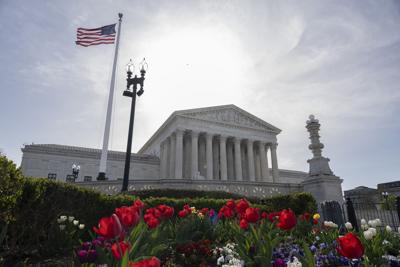
Flowers adorn a garden in front of the U.S. Supreme Court building on March 31 in Washington, D.C.
Roberto Schmidt
In an 8-1 decision last week, the Supreme Court struck down a Colorado law that prohibited so-called conversion therapy aimed at changing the gender expression or sexual orientation of minors. The court saw itself as intervening to protect therapists from government bias on an issue that has stirred up the culture wars. But it has also substantially weakened the government’s capacity to regulate professional conduct that is accomplished by speech. And it has opened the door to future challenges to all kinds of professional regulation.
The majority opinion, by Justice Neil Gorsuch, says the law regulated the content of the therapist’s speech and discriminated based on viewpoint by allowing the therapist to affirm but not negate patients’ feelings about gender and sexual orientation. The court expresses its worry that Colorado was barring conversion therapy for effectively political reasons. It notes that medical opinions about hot-button topics like sexuality have changed over time, warning that if the state’s ban were allowed to stand, “any professional speech that deviates from current beliefs about the safety and efficacy of various medical treatments could be silenced with relative ease.�
Home delivery and Digital Access customers of The ÃÛÌÒÃÜÁÄAPP get deals for restaurants, hotels, attractions and other businesses, locally and across the country.
Trending Recipes
Play sudoku, the daily jigsaw, word search and more.



Commented
Sorry, there are no recent results for popular commented articles.